Virginia Governor Vetoes Fairfax County Casino Referendum Amid Unanimous Local Resistance

The Veto That Stopped a Casino Push in Tysons
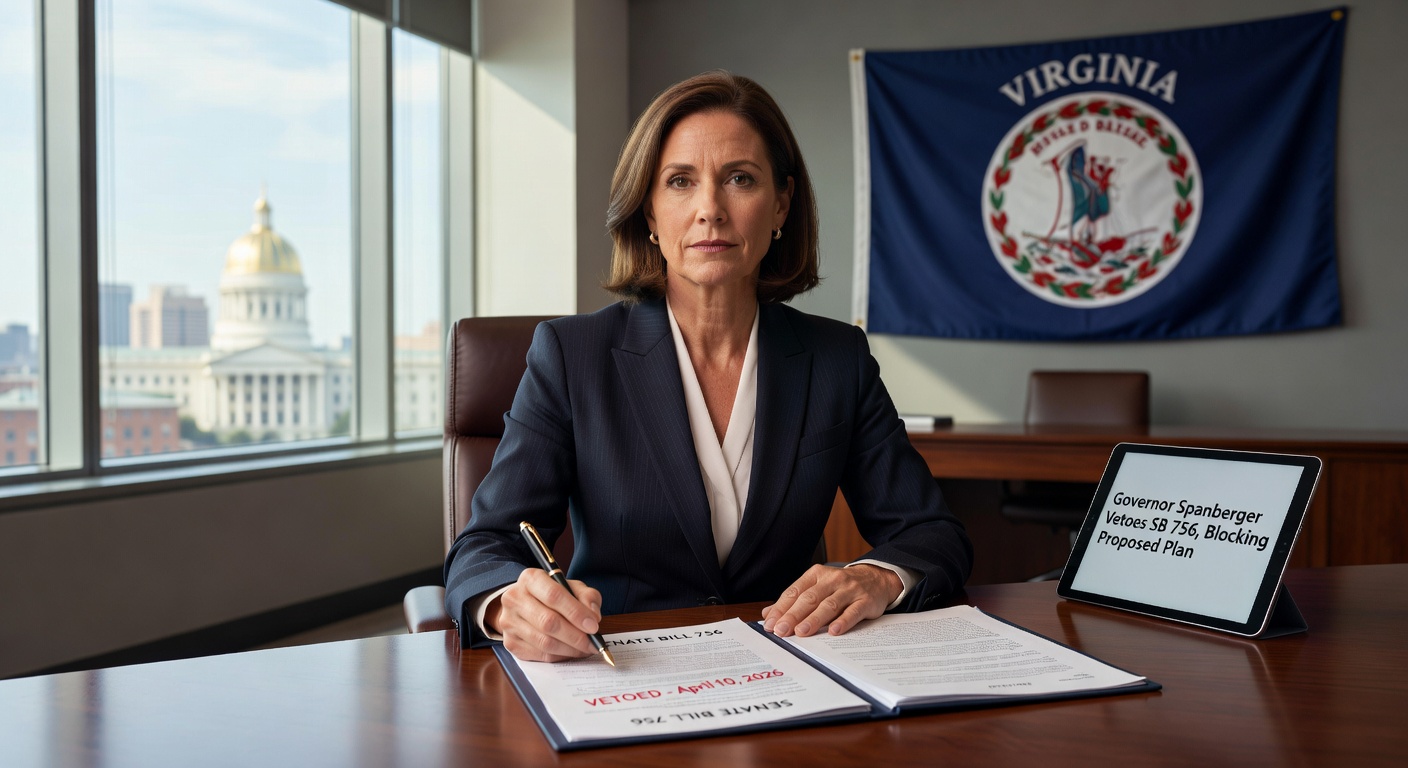
On April 10, 2026, Virginia Governor Abigail Spanberger delivered a decisive veto against Senate Bill 756, effectively halting plans that would have compelled Fairfax County to hold a referendum on building a Las Vegas-style casino in the bustling Tysons area; this move came despite unanimous opposition from the Fairfax County Board of Supervisors, who had made their stance crystal clear months earlier. The bill, which navigated through the state Senate with sponsorship from Majority Leader Scott Surovell (D-Fairfax), sought to override local authority and inject a sixth commercial gaming facility into Virginia's expanding casino scene, but Spanberger's action preserved the county's control over such high-stakes developments.
What's interesting here is how the veto underscores tensions between state-level ambitions for gaming revenue and grassroots decision-making in one of Virginia's wealthiest suburbs; Tysons, known for its office towers, high-end retail, and proximity to Washington D.C., suddenly found itself at the center of a debate that pitted economic boosters against community leaders wary of gambling's footprint. According to reports from WTOP News, the governor's message emphasized respect for local voices, signaling that Fairfax's rejection wasn't just noise but a binding factor in her decision.
Unpacking Senate Bill 756 and Its Bold Overreach
Senate Bill 756 didn't emerge from thin air; lawmakers crafted it to force a public vote in Fairfax County on November 2026 ballots, bypassing the supervisors' outright dismissal of casino proposals back in 2025, when developers first floated ideas for a massive resort complete with slots, table games, and entertainment venues modeled after Sin City's glitz. Surovell, representing Fairfax districts himself, championed the measure as a way to let voters—not just elected officials—decide on potential jobs, tax dollars, and tourism boosts, arguing that the county's board ignored broader constituent interests in their unanimous no-vote.
But here's the thing: the bill's language was precise, mandating a referendum question on whether to authorize a casino operator to develop up to 2,000 gaming positions in Tysons, right alongside Virginia's five existing commercial casinos in places like Danville, Norfolk, and Portsmouth; those facilities, approved via voter referendums in their localities, have generated hundreds of millions in state revenue since opening phases began in 2022, with data from the Virginia Lottery showing over $500 million in gaming taxes collected by early 2026. Observers note that proponents saw Tysons' prime location—mere miles from the Capital Beltway and Dulles Airport—as a goldmine for further expansion, yet the bill's override clause rubbed local leaders the wrong way, since Fairfax had already weighed and rejected similar pitches.
Take the supervisors' resolution from last fall: all 10 members, spanning party lines, declared the area unsuitable for a casino, citing traffic nightmares, quality-of-life concerns, and sufficient commercial development already underway; they pointed to Tysons' transformation into a walkable urban hub with luxury apartments and tech offices, where a gambling mecca might clash like oil and water.
Spanberger's Veto Message Cuts Straight to Local Control
In her official veto statement, Governor Spanberger laid it out plainly, stating that overriding Fairfax's elected representatives undermined democratic principles at the local level, especially when the board's opposition stood unanimous and resolute; she highlighted how Virginia's casino law framework already empowers communities through referendums, but only when localities invite them—not when the state imposes from Richmond. This stance aligns with patterns in her administration, where she's balanced gaming growth with safeguards against top-down mandates.
Turns out, the veto arrived just days after the General Assembly adjourned its 2026 session, leaving little time for an override attempt that would require two-thirds majorities in both chambers—a tall order given divided sentiments even among Democrats. Reports from DC News Now captured the immediate fallout, with Surovell expressing disappointment but acknowledging the governor's prerogative, while supervisors hailed it as a victory for home rule.
Now, with the bill dead, attention shifts to what developers might do next; some insiders speculate private negotiations or alternative sites, but Fairfax's firm no leaves the ball squarely in their court, and without state muscle, progress stalls.
Fairfax Supervisors' United Front Against the Casino
The Fairfax County Board of Supervisors didn't mince words in their opposition, passing a resolution in December 2025 that unanimously rejected any casino in Tysons or elsewhere in the county; Chair Jeff McKay (D), alongside members like Rodney Lusk (D) and Pat Herrity (R), argued that gaming wouldn't mesh with the area's family-friendly evolution, backed by studies showing potential rises in problem gambling and crime near casinos—issues documented in early Virginia operations like Hard Rock in Bristol.
People who've followed Fairfax politics know this board rarely unites so completely; their stance drew from public hearings where residents voiced fears over increased traffic on already congested Route 7 and I-495, plus the dilution of Tysons' brand as a premier business destination for firms like Capital One and Google. Data from county planners indicated the area already hosts over 100,000 jobs, with vacancy rates low and development booming, making a casino seem like an unnecessary gamble.
Surovell's Rationale and the Broader Gaming Push
Senate Majority Leader Scott Surovell positioned the bill as democracy in action, insisting that while supervisors opposed it, polls in his district hinted at voter support for casino revenue that could fund schools and roads; he sponsored SB 756 after initial proposals fizzled, navigating it through committee with promises of strict regulations, including 15% local tax shares and minority-owned business mandates for the operator.
Yet the reality is that Virginia's casino rollout has been methodical: five projects greenlit by 2021 legislation, all requiring local referendums and now operational or nearing completion, have poured $2.4 billion into construction and created 10,000 jobs per state lottery figures; Surovell eyed Tysons as the next logical spot, given its economic heft—Fairfax generates over $10 billion in annual local taxes—but the veto message from Spanberger made clear that expansion stops where local consensus ends.
One case worth noting involves Norfolk's successful casino vote in 2019, where community buy-in led to Rivers Casino's 2023 opening and $100 million-plus in yearly revenue; contrast that with Fairfax, where no such enthusiasm existed, and the bill's fate becomes less surprising.
Virginia's Evolving Casino Landscape in Context
By April 2026, Virginia boasts five commercial casinos either open or ramping up, from Caesars in Danville to a planned Live! in Henrico, all fueling a gaming industry that's remade former tobacco towns and port cities; state data reveals $700 million projected in taxes for fiscal 2027, with sports betting adding another layer since 2021 legalization. But not every locality jumps aboard—Richmond voters rejected a casino twice, in 2021 and 2023—proving referendums aren't slam dunks.
In Tysons, the proposal echoed those patterns but hit a wall; developers like Bally's had eyed the site, promising a $3 billion project with hotels and convention space, yet supervisors countered with zoning realities and environmental reviews that deemed it unviable. This veto reinforces that framework, where locals hold the veto power unless supermajorities in Richmond say otherwise.
So, while gaming grows—pop. 8.7 million Virginians now have access within drives of facilities—the Fairfax saga shows boundaries, especially in suburbs prioritizing mixed-use over neon lights.
Conclusion: Local Voices Prevail in Casino Debate
Governor Spanberger's veto of Senate Bill 756 on April 10, 2026, solidifies Fairfax County's authority over its future, blocking a forced referendum on a Tysons casino that local supervisors rejected unanimously; by prioritizing home rule, the decision navigates Virginia's gaming boom without trampling community will, leaving developers to pivot and lawmakers to reflect on state-local dynamics. As NBC Washington reports detail, this chapter closes with balance restored, though gaming's allure ensures future pitches won't vanish entirely. Those tracking Virginia's economy watch closely, knowing revenue streams continue from established sites while Tysons stays casino-free—for now.