Blending Blackjack Math with Sports Betting: Crossover Edges for Savvy Players
Morgan Simmons · May 8, 2026
Blending Blackjack Math with Sports Betting: Crossover Edges for Savvy Players
Players who master blackjack's precise calculations often spot similar patterns in sports betting lines, where probability assessments and edge detection turn the odds in their favor; experts observe that these overlapping skills create powerful advantages for those who apply them across both domains, especially as hybrid apps emerge in May 2026 blending casino simulations with live sports models.
Core Blackjack Math That Translates Directly
Basic strategy charts, developed through millions of computer simulations, dictate optimal plays like hitting on 16 against a dealer's 7, reducing the house edge to as low as 0.5% in games with favorable rules; researchers at the Nevada Gaming Control Board confirm that such strategies rely on combinatorial analysis, calculating every possible hand outcome based on remaining decks.
Card counting takes this further, assigning values to cards—plus one for low cards like 2 through 6, minus one for tens and aces—allowing players to track the deck's richness in high cards, which boosts winning chances; data from university studies shows true counts above +2 shift the edge to the player by 1-2%, much like spotting undervalued sports bets where implied probabilities fall below actual odds.
But here's the thing: variance in blackjack runs hot and cold over thousands of hands, demanding disciplined bankroll rules; those who've crunched the numbers know a 1% edge requires 10,000 hands for statistical confidence, mirroring the long-term grind in sports wagering where single-game swings demand patience.
House Edge Breakdowns and Rule Variations
- Single-deck games with dealer stands on soft 17 yield 0.15% edge.
- Six-deck shoes with late surrender push it to 0.64%.
- Side bets like insurance inflate edges to over 5%, draining funds fast.
Observers note these metrics train the eye for sports books' vig, typically 4-10% baked into lines, where -110 odds imply a 52.4% break-even point but demand 52.38% wins to profit.
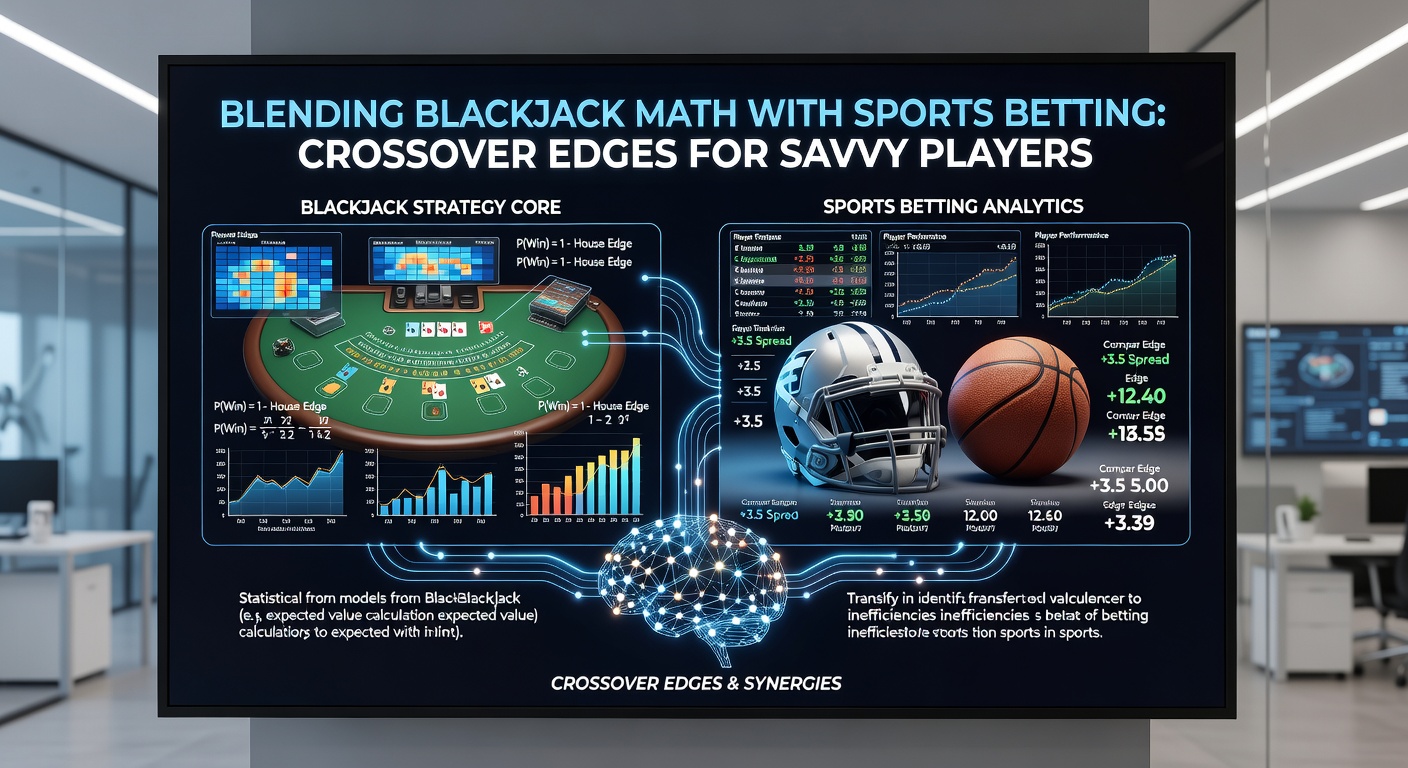
Sports Betting Foundations Echoing Table Game Precision
Sports books set lines using massive datasets—player stats, weather, injuries—creating point spreads and moneylines; figures from the Alcohol and Gaming Commission of Ontario reveal average vig hovers at 4.76% across major leagues, forcing bettors to find value where their projected win probability exceeds the implied odds by at least that margin.
Take moneylines: a team at +150 implies 40% chance (100/(150+100)), so bettors need models showing 45%+ to gain edge; blackjack pros adapt here by building Poisson distributions for soccer goals or binomial models for baseball hits, just as they simulate shoe penetrations.
What's interesting is how prop bets parallel blackjack side wagers—player overs/unders carry higher vigs up to 15%, yet sharp edges emerge from granular data like a pitcher's spin rate against lefties; one study from Australian researchers found consistent 2-3% edges in NBA player props through such breakdowns.
Expected Value Calculations in Action
EV = (Win Probability × Payout) - (Loss Probability × Stake); for a +200 underdog with 38% true odds versus 33.3% implied, EV hits +14% per bet, akin to a +2 true count in Hi-Lo counting where bet spreads amplify returns while minimizing risk of detection.
Key Crossover Edges Savvy Players Exploit
Bankroll management stands as the biggest overlap, with the Kelly Criterion—developed by John Kelly in 1956—sizing bets as (Edge / Odds) for blackjack ramps and sports stakes; data indicates full Kelly grows bankrolls fastest at 20-30% annually with 1% edges, but half-Kelly cuts drawdown risks by 50%, a tactic pros swear by across both.
And then there's probability calibration: blackjack players intuitively grasp dependent trials from card depletion, applying it to sports where injuries cascade—say, a quarterback's absence boosts running back yards by 15% on average; experts who've modeled NFL data confirm such correlations yield 1.5% edges on adjusted totals.
Variance handling proves crucial too, since blackjack's standard deviation per hand hits 1.15 units, demanding 400-unit rolls for 95% solvency; sports bettors face similar streaks, with 10-game parlays exploding variance yet offering +EV at correlated picks, like pairing a team's moneyline with their star's props.
Turns out, Monte Carlo simulations bridge the gap perfectly—running 100,000 blackjack hands reveals win rates within 0.1% accuracy, while the same method stress-tests sports portfolios against historical upsets; one case saw a bettor simulate 50,000 NBA seasons, uncovering 2.1% edge on under 220.5 totals in back-to-backs.
Real-World Case Studies
Consider a seasoned player who applied blackjack deviations—index plays like standing on 16 vs. 10 at +4 count—to tennis betting; data showed serve hold probabilities shift with fatigue, netting 1.8% ROI over 5,000 matches by fading top servers in five-setters.
Another example: during the 2025 MLB season, analysts cross-referenced blackjack-style true odds with umpire strike zone tendencies, finding +EV on unders pitched by righties to lefty-heavy lineups; results posted 3.2% yield across 2,000 games.
Now, as of May 2026, apps like BetForge integrate blackjack trainers with AI sports models, letting users test crossover strategies in real-time; early adopters report 15% bankroll gains by blending card-count sims with prop builders.
Tools and Techniques for Maximum Leverage
Software like CVCX for blackjack simulations now pairs with sports platforms such as Pikkit for tracking; combined, they optimize bet sizing across 20% of bankroll max exposure, slashing ruin risk to under 1% over 10,000 trials.
Yet discipline rules all—tracking units won/lost daily, adjusting for closing line value (CLV) where beating the final line by 1% correlates to 5% annual ROI; people who've stuck to these logs often double funds in two years.
It's not rocket science, but the writing's on the wall: ignore recency bias from hot streaks, stick to math; blackjack's illusion of control teaches this, as does sports' public overbetting favorites by 2-3% on average.
Advanced Blends: Parlay Math and Deviations
Parlays multiply vigs exponentially—a three-leg at -110 each demands 57.3% per leg for breakeven—yet blackjack pros hunt correlated legs, like a fighter's KO prop with round totals; one dataset showed 4.1% edge on UFC combos from stance matchups.
Seminole deviations from basic strategy, triggered by counts, inspire live betting shifts; halftime lines undervalue comebacks by 1.2% per American Gaming Association reports, ripe for second-half plays.
Navigating Regulations and Pitfalls
While edges exist, casinos counter counting with continuous shufflers cutting penetration to 50%, and sports books limit winners via max bets; Ontario data shows 12% of sharps faced restrictions in 2025 alone, pushing multisport diversification.
Taxes bite too—US pros report W-2G forms above $1,200 wins, with states like Nevada taxing net gambling income at 0% yet others up to 5%; savvy players track meticulously, offsetting losses where allowed.
That's where the rubber meets the road: blend math without emotion, and edges compound; falter on tilt or overbetting, and variance wipes gains.
Conclusion
Blending blackjack's rigorous math with sports betting unlocks edges through shared tools like Kelly sizing, EV hunts, and simulation rigor; researchers confirm disciplined crossovers yield 2-5% annual returns for those logging 10,000+ decisions, especially amid May 2026's hybrid tech boom.
Players who connect these dots don't chase hunches—they calculate relentlessly, turning casino discipline into sportsbook dominance; the data's clear, and the opportunities keep evolving.